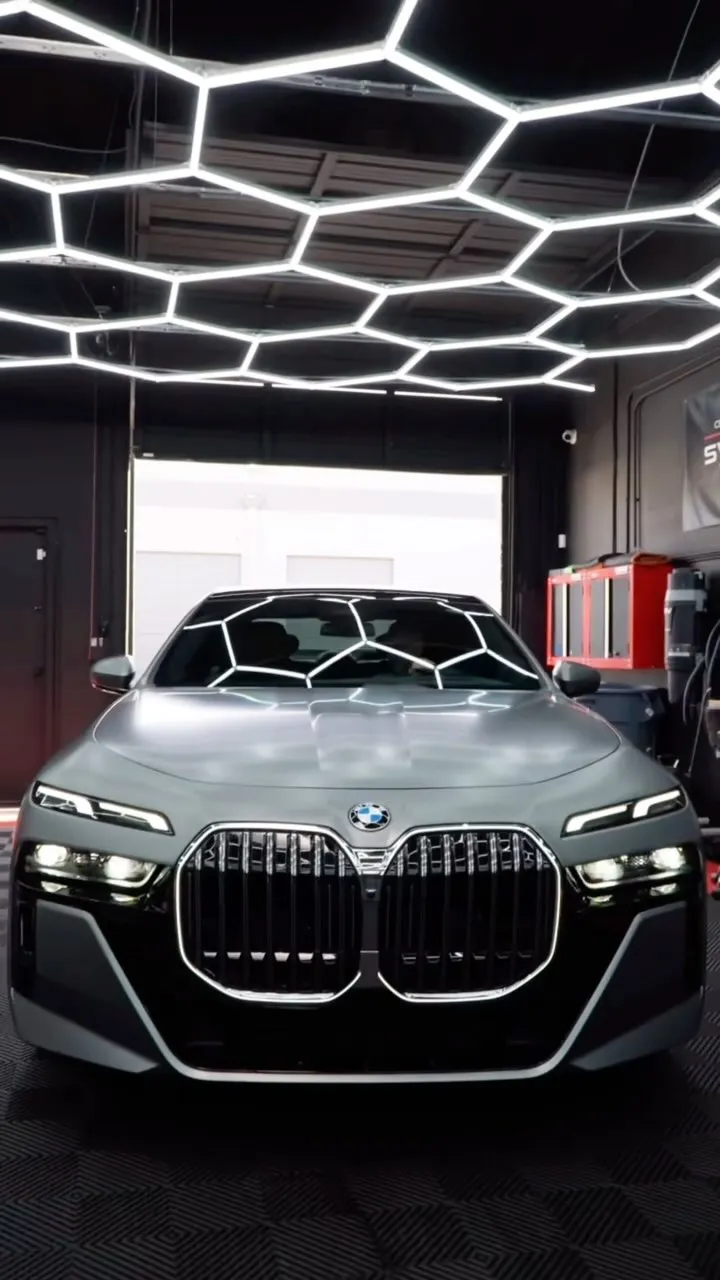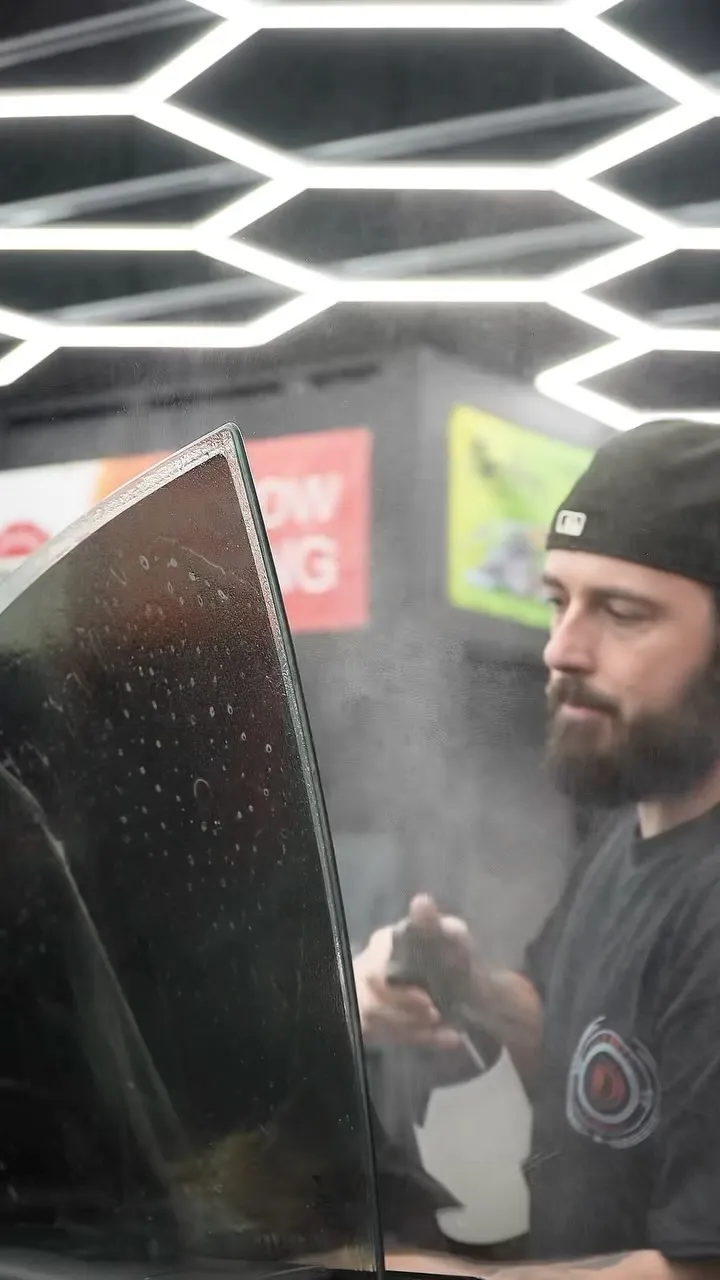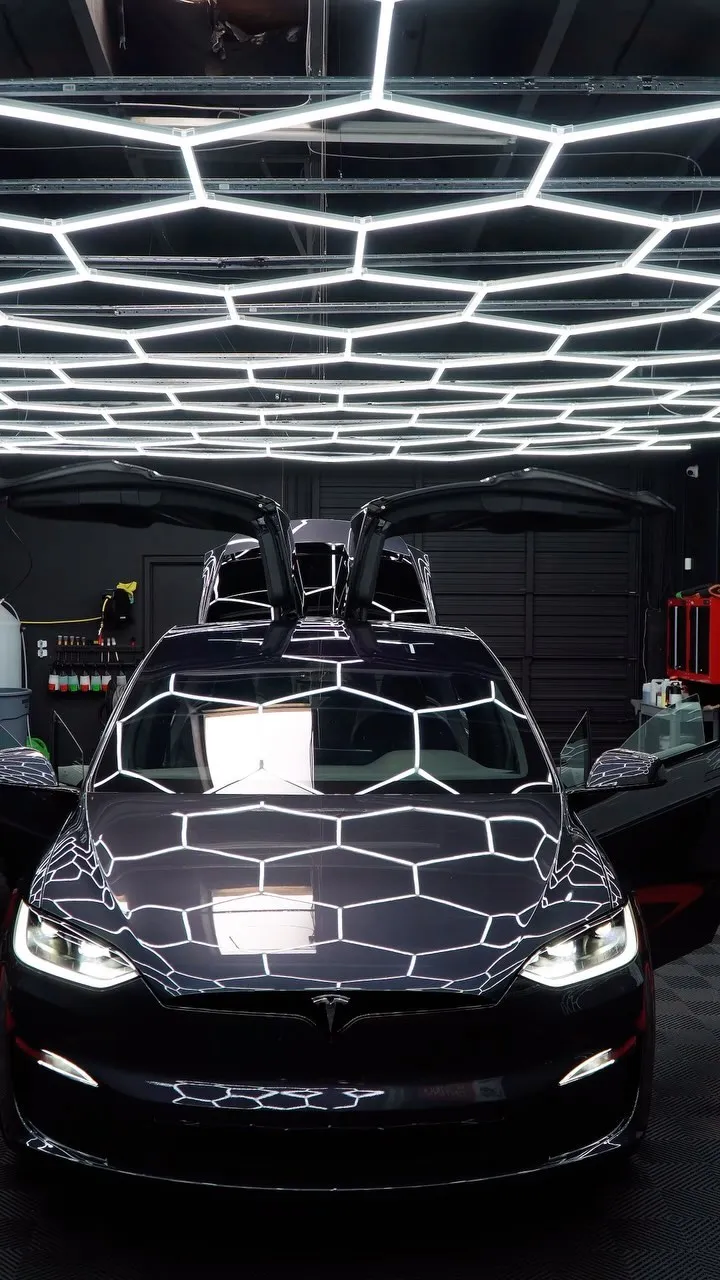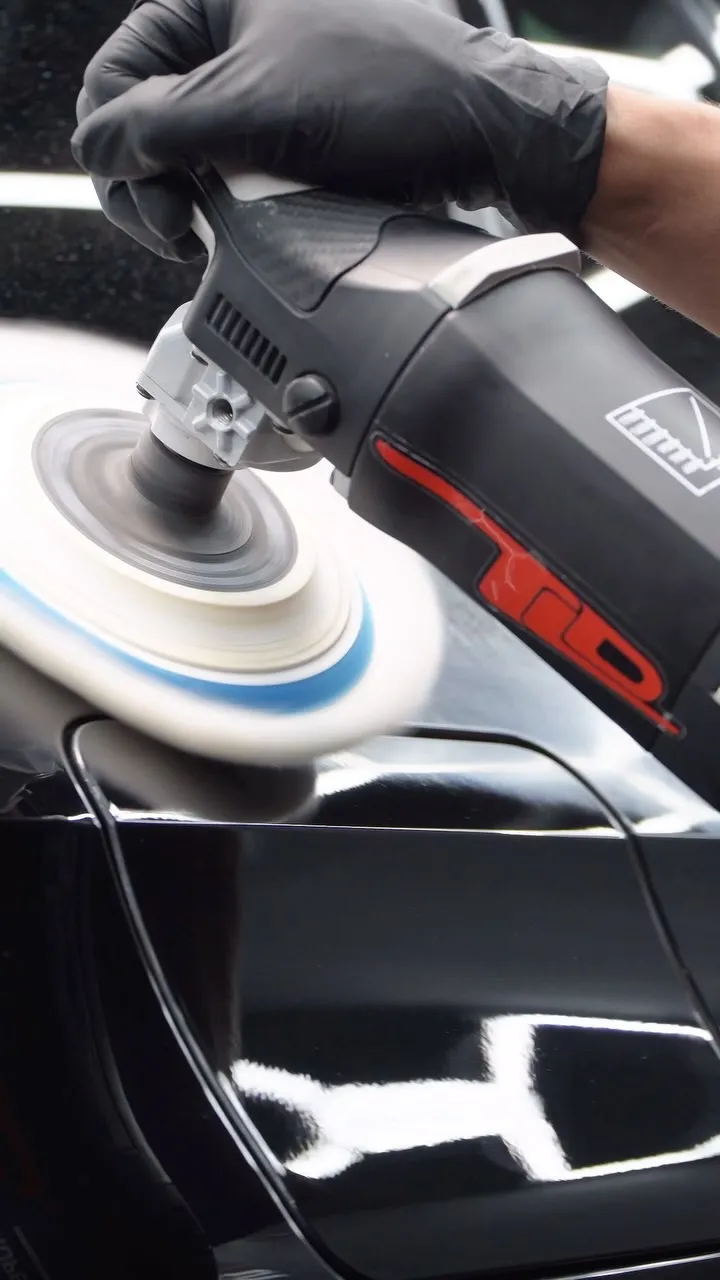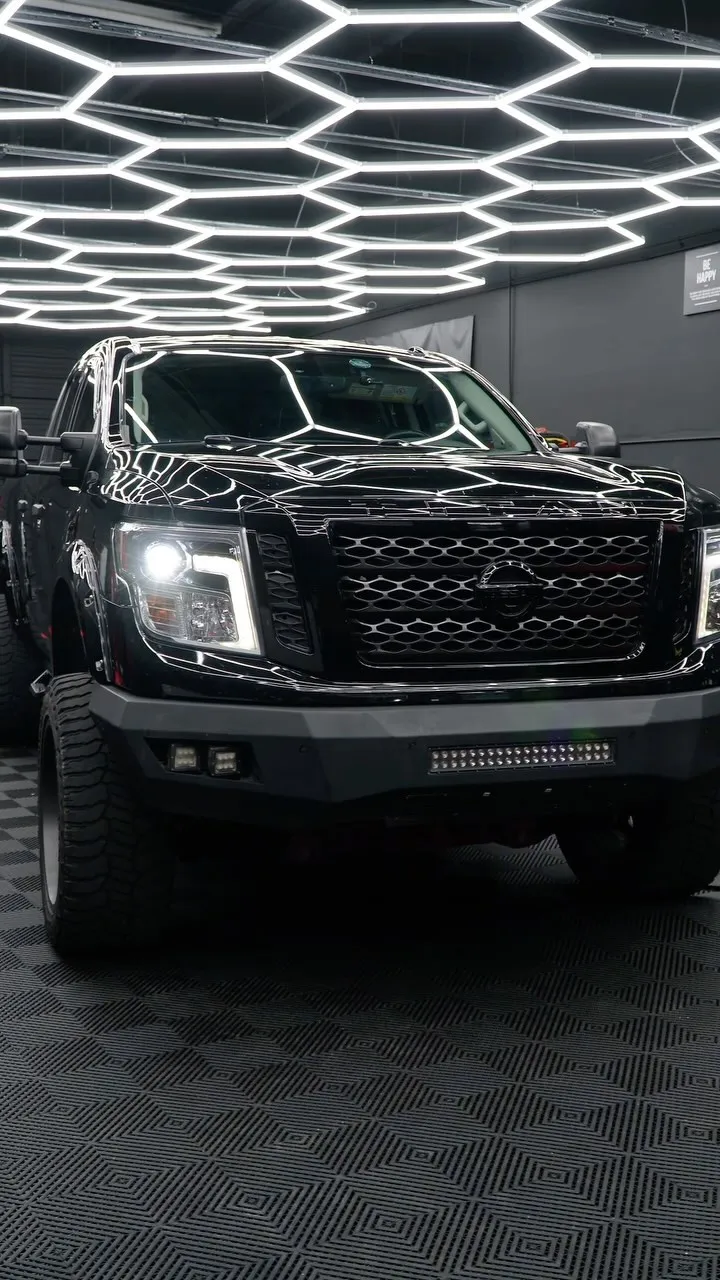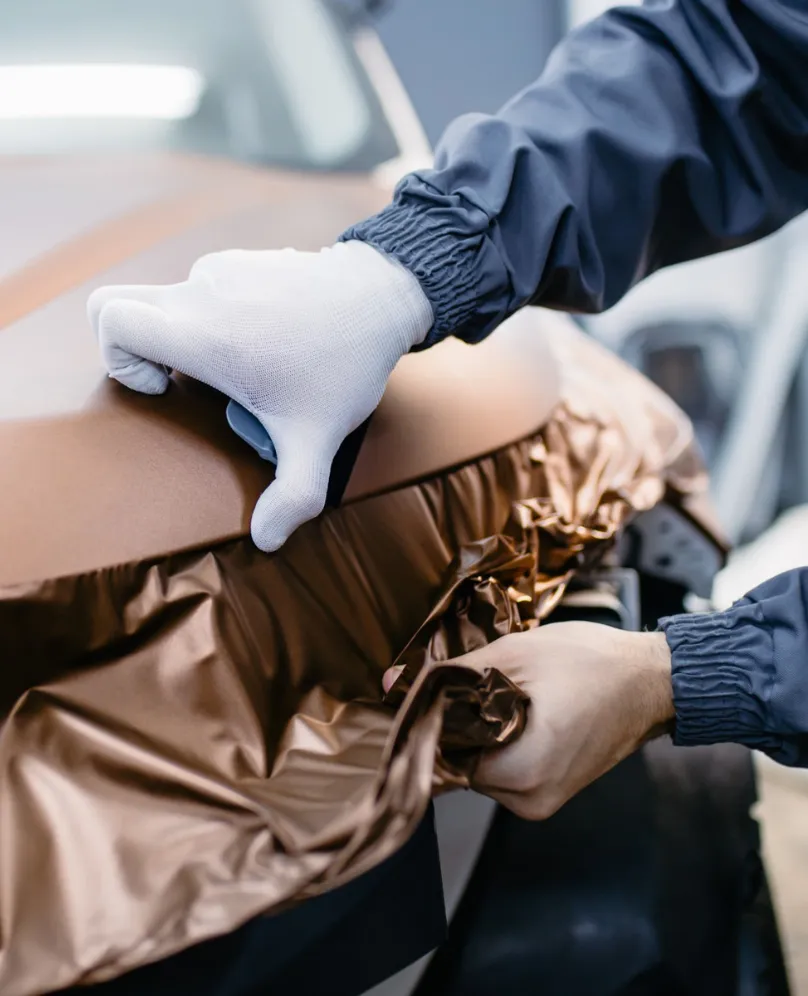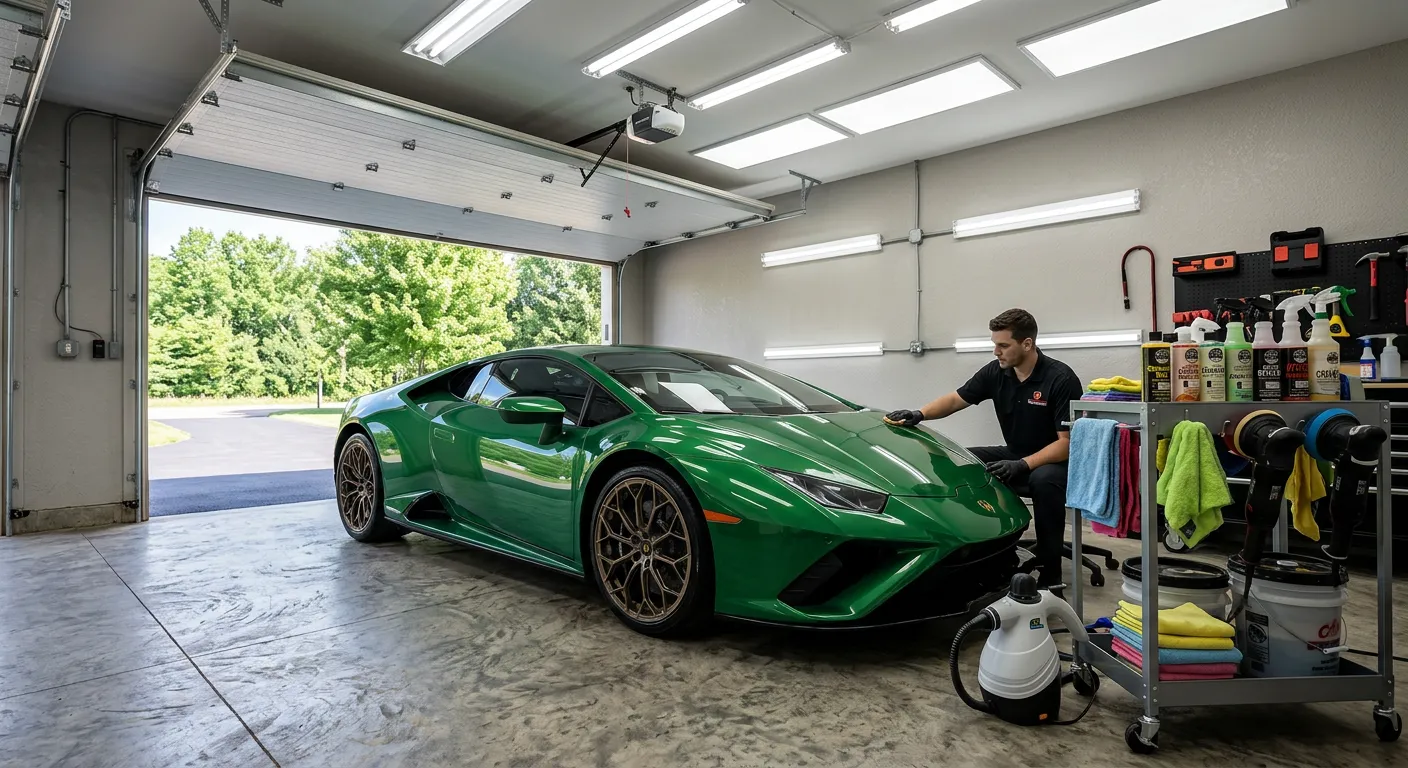
How often should you detail your car in Las Vegas? For many drivers, a full detail a few times per year works well, with maintenance washes and interior cleanups between visits. If your car is parked outside, driven daily, exposed to sprinklers, covered in desert dust, or used for kids, pets, work, or rideshare driving, you may need detailing more often.
At Daily Details Garage, we offer automotive detailing in Las Vegas for drivers who want their vehicle cleaned with care inside and out. Our shop is located at 5160 S Valley View Blvd Ste 108, Las Vegas, NV 89118. We serve Las Vegas, NV, Henderson, NV, Summerlin, NV, and Enterprise, NV.
Here is why detailing frequency matters. Las Vegas vehicles deal with heat, sun, dust, hard water, road film, bug splatter, and frequent washing. A regular detailing schedule helps keep your car cleaner, protects the finish, and helps you catch paint or interior issues before they get worse.
Table of Contents
- How Often Should You Detail Your Car in Las Vegas?
- Why Las Vegas Cars Need Detailing More Often
- What Counts as Auto Detailing?
- How Often Should Daily Drivers Be Detailed?
- How Often Should Garage-Kept Cars Be Detailed?
- How Often Should Outdoor-Parked Cars Be Detailed?
- How Often Should Trucks and SUVs Be Detailed?
- How Often Should Teslas and EVs Be Detailed?
- How Often Should You Detail the Interior?
- How Often Should You Detail the Exterior?
- Signs Your Car Needs Detailing Now
- When Detailing Is Not Enough
- How Ceramic Coating Changes Your Detailing Schedule
- How PPF Changes Your Detailing Schedule
- Book Auto Detailing in Las Vegas
- FAQs About How Often to Detail Your Car
- Sources
How Often Should You Detail Your Car in Las Vegas?
How often should you detail your car in Las Vegas? A good starting point is a full detail a few times per year, with regular maintenance washes between details. That schedule may change based on where the car is parked, how often it is driven, and how much dust, grime, food, spills, or pet hair it collects.
For many Las Vegas drivers, the schedule looks like this:
- Maintenance wash as needed
- Interior wipe-down and vacuum as needed
- Full detail a few times per year
- More frequent detailing for outdoor-parked daily drivers
- More frequent interior detailing for kids, pets, rideshare, or work vehicles
- Maintenance service for coated or protected vehicles
Let’s break it down. A car wash removes loose dirt. A detail goes deeper. It can clean paint, wheels, tires, trim, glass, carpets, seats, vents, cup holders, door jambs, and other areas that a fast wash misses.
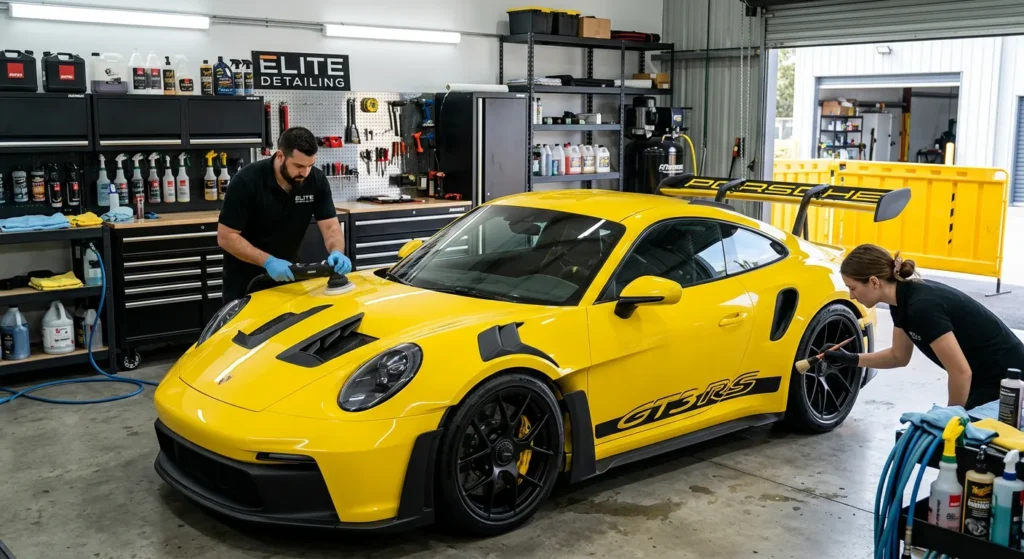
The right detailing schedule should fit your life. A garage-kept weekend car needs less work than a family SUV parked outside every day. A work truck needs a different plan than a luxury sedan. A Tesla used for commuting may need more exterior care if it collects bugs, dust, and hard water.
Why Las Vegas Cars Need Detailing More Often
How often should you detail your car in Las Vegas? Many vehicles here need care more often than cars in milder places because the desert is rough on paint and interiors. The National Weather Service Las Vegas Climate Book is maintained by the local weather office using official station records, publications, forms, and datasets. The EPA says the UV Index gives a daily forecast of expected UV radiation intensity from the sun.
In daily driving, Las Vegas vehicles face:
- Desert dust
- Strong sun
- Hot panels
- Hard water
- Sprinkler spots
- Bug splatter
- Road film
- Wind-blown grit
- Construction dust
- Freeway debris
- Dry air
- Interior dust buildup
Now here’s the thing. Dust may look harmless, but it can scratch paint if wiped off dry. Hard water can leave mineral spots when it dries on hot panels. Sun can make interior surfaces feel dry and worn if the cabin is not cleaned and cared for.
Drivers in Henderson, NV, Summerlin, NV, and Enterprise, NV deal with many of the same conditions. A regular detailing schedule helps keep the vehicle from getting too far behind.
What Counts as Auto Detailing?
Auto detailing is a deeper cleaning and care service than a basic wash. It can include exterior washing, wheel cleaning, tire cleaning, interior vacuuming, surface cleaning, glass cleaning, paint decontamination, and protection recommendations.
At Daily Details Garage, automotive detailing can help reset a vehicle that has built-up dust, grime, stains, road film, water spots, or cabin mess.
Auto detailing may include:
- Exterior hand wash
- Wheel and tire cleaning
- Bug removal
- Door jamb cleaning
- Interior vacuuming
- Floor mat cleaning
- Interior surface cleaning
- Cup holder cleaning
- Vent cleaning
- Interior glass cleaning
- Exterior glass cleaning
- Paint decontamination when needed
- Trim cleaning
- Tire dressing
- Protection recommendations
Here is why this matters. A clean car is easier to inspect. Once the dirt is gone, you can see whether the paint needs paint correction, ceramic coating, or paint protection film.
How Often Should Daily Drivers Be Detailed?
Daily drivers in Las Vegas often need detailing more often because they face dust, heat, traffic grime, bugs, spills, fingerprints, and regular cabin use. If your car gets driven every day, a full detail a few times per year is a smart rhythm, with maintenance washes and interior cleanups between visits.
A daily driver may need detailing sooner if:
- The paint feels rough
- Wheels are covered in brake dust
- Glass has a film
- The interior smells stale
- Floor mats are dirty
- Cup holders are sticky
- Dust is sitting in vents
- Bugs are baked onto the bumper
- Water spots are visible
- The vehicle feels dirty right after washing
Bottom line, daily driving creates daily buildup. Waiting too long can make cleaning harder and may leave more chances for stains, odors, water spots, and paint defects.
If you commute across Las Vegas, NV or drive often between Henderson, NV and Summerlin, NV, your car may benefit from more regular maintenance care.
How Often Should Garage-Kept Cars Be Detailed?
Garage-kept cars usually need detailing less often than outdoor-parked vehicles. A weekend car that stays indoors and is driven lightly may only need a full detail a few times per year, depending on use.
Garage-kept cars still collect:
- Light dust
- Fingerprints
- Tire dust
- Interior dust
- Glass haze
- Occasional bugs
- Road film after drives
The real question is how often the car is driven. A garage-kept sports car that takes weekend drives may need exterior cleaning after each drive and a full detail a few times per year. A garage-kept daily driver still needs more care because it sees the road every day.
Garage storage helps, but it does not replace detailing. Dust can still settle. Wheels still collect brake dust. Interiors still collect skin oils, sunscreen, food crumbs, and fingerprints.
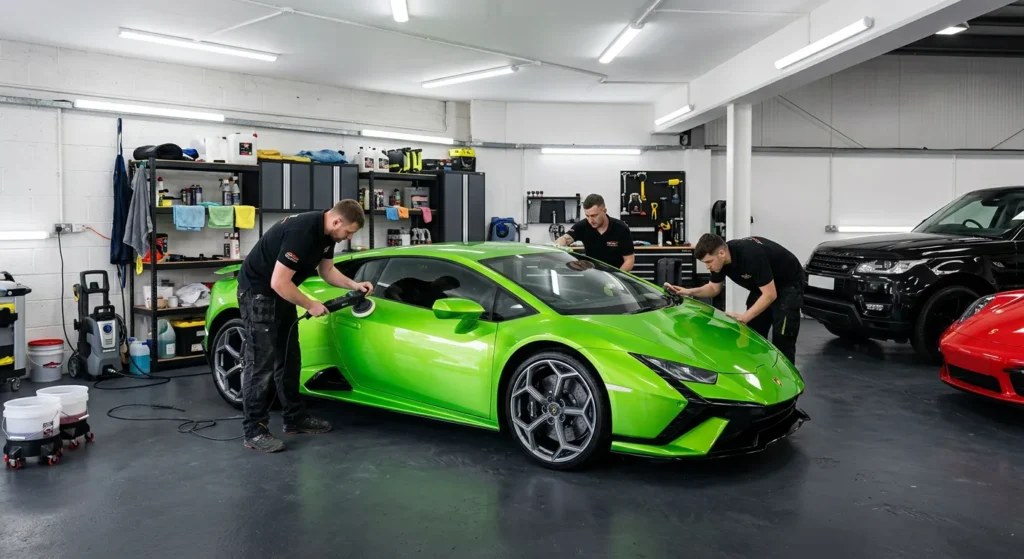
If your garage-kept vehicle has a coating or film, Daily Details Garage can help with maintenance detailing to keep protection working well.
How Often Should Outdoor-Parked Cars Be Detailed?
Outdoor-parked cars in Las Vegas often need the most detailing care. Sun, dust, sprinklers, hard water, birds, bugs, and wind can all affect the vehicle.
An outdoor-parked vehicle may need:
- More frequent maintenance washes
- Full detail a few times per year
- Interior cleaning more often if dust gets inside
- Hard water spot checks
- Paint decontamination when the surface feels rough
- Protection such as ceramic coating or PPF
Here’s what matters. Outdoor parking exposes the car all day and night. Sprinklers can hit the paint. Dust can build up quickly. Bird droppings can bake onto hot panels. If the car is ignored too long, the cleanup can become harder.
Ceramic coating can make outdoor-parked vehicles easier to wash, but it does not make them maintenance-free. Paint Protection Film can help with chips and road debris, but it also needs safe cleaning.
How Often Should Trucks and SUVs Be Detailed?
Trucks and SUVs may need detailing more often because they have more surface area and often see heavier use. A full-size truck, lifted truck, family SUV, or work SUV can collect dust, dirt, brake dust, road film, pet hair, food crumbs, and cargo mess quickly.
Truck and SUV areas that often need attention include:
- Front bumper
- Grille
- Hood
- Mirrors
- Wheels
- Tires
- Rocker panels
- Lower doors
- Bed areas
- Tailgate
- Rear hatch
- Cargo area
- Floor mats
- Seat backs
What this means is simple. Larger vehicles take more time to clean and more time to inspect. A large SUV parked outside in Las Vegas, NV may need frequent maintenance washes and full details a few times per year.
If your truck or SUV is coated, safe washing is still needed. If it is not coated, ceramic coating can make cleaning large panels easier.
How Often Should Teslas and EVs Be Detailed?
Teslas and EVs should be detailed based on use, parking, and paint condition. Tesla Model 3, Model Y, Model S, and Model X vehicles often have smooth body panels and large glass areas that show dust, fingerprints, bugs, and water spots.
Tesla owners may need detailing more often if:
- The vehicle is parked outside
- The paint is black or dark
- Bugs build up on the front bumper
- The glass gets spotted
- The cabin collects dust
- The vehicle is used for rideshare
- The car is driven on freeways often
Many Tesla owners also ask about PPF and ceramic coating after detailing. That is a smart conversation because detailing cleans the car, PPF helps with chips, and ceramic coating helps with wash ease.
If your Tesla has swirl marks or haze, paint correction may be recommended before coating or film.
How Often Should You Detail the Interior?
Interior detailing frequency depends on how the cabin is used. A single commuter may need less interior detailing than a family SUV, rideshare vehicle, or work truck.
You may need interior detailing more often if you have:
- Kids
- Pets
- Food and drinks in the car
- Work dust
- Gym gear
- Rideshare use
- Frequent passengers
- Sticky cup holders
- Dirty floor mats
- Dusty vents
- Leather or vinyl buildup
- Interior odors
Interior detailing may include vacuuming, mat cleaning, seat cleaning, panel cleaning, cup holder cleaning, vent cleaning, and glass cleaning.
Now here’s the thing. Interior dirt gets harder to remove the longer it sits. Spills can stain. Dust can settle into vents and seams. Sunscreen and skin oils can build up on steering wheels, armrests, and door panels.
For many Las Vegas drivers, interior maintenance every few weeks at home plus professional interior detailing a few times per year can keep the cabin feeling better.
How Often Should You Detail the Exterior?
Exterior detailing frequency depends on dust, parking, paint protection, driving habits, and weather exposure. In Las Vegas, exterior detailing is often needed more often for outdoor-parked vehicles and daily drivers.
You may need exterior detailing when:
- The paint feels rough
- Dust keeps building up
- Water spots appear
- Bugs are stuck to the front end
- Wheels are stained with brake dust
- Trim looks dirty
- Glass has mineral spots
- The paint looks dull
- A wash no longer makes the car feel clean
Exterior detailing may include washing, wheel cleaning, tire cleaning, bug removal, door jamb cleaning, glass cleaning, decontamination, and protection guidance.
If your exterior still looks dull after detailing, paint correction may be needed. If your exterior gets dirty too quickly, ceramic coating may help. If your front end has chips, PPF may be the better choice.
Signs Your Car Needs Detailing Now
How often should you detail your car in Las Vegas? Sometimes the car tells you. You may not need to wait for a calendar date if the vehicle is already showing signs of buildup.
Signs your car needs detailing now include:
- The paint feels rough after washing
- Wheels are dark with brake dust
- Bugs are stuck on the bumper
- The windshield has haze
- The cabin smells stale
- Seats feel dirty
- Floor mats are packed with dirt
- Dust is in vents and seams
- Door jambs are dirty
- Cup holders are sticky
- The vehicle looks dull after a wash
- Hard water spots are visible
The catch is that waiting too long can make some problems harder to remove. Bird droppings, bug splatter, and hard water should not sit in the Las Vegas heat.
If your vehicle has any of these signs, call Daily Details Garage at (702) 501-6585 or visit https://dailydetailsgarage.com/contact-us.
When Detailing Is Not Enough
Detailing can clean a vehicle, but it cannot fix every problem. If the paint has swirl marks, scratches, oxidation, or water spot etching, you may need paint correction.
Detailing may not fix:
- Swirl marks
- Light scratches
- Deep scratches
- Rock chips
- Failed clear coat
- Heavy oxidation
- Etched water spots
- Peeling paint
- Torn interior materials
- Permanent stains
Paint correction can reduce swirls, light scratches, haze, and some water spots. PPF can help protect against future chips. Ceramic coating can help make washing easier. Window tint can help with glare and cabin comfort.
Daily Details Garage offers all of these services, so we can help you choose the right next step instead of guessing.
How Ceramic Coating Changes Your Detailing Schedule
Ceramic coating can change your detailing schedule because it makes the vehicle easier to wash and maintain. It does not stop dust from landing on the car, but it can help dust, grime, bugs, and road film release more easily during proper washing.
Daily Details Garage installs System X ceramic coating. We are System X certified and a System X vendor, with warranties on our products and services. System X also provides warranty registration and annual inspection reminders when the owner’s email is entered.
A coated vehicle may still need:
- Regular maintenance washes
- Safe drying
- Bug removal
- Water spot checks
- Coating maintenance
- Interior detailing
- Occasional decontamination
- Inspection if water behavior changes
Bottom line, ceramic coating does not replace detailing. It can make detailing easier and help the vehicle stay cleaner between visits.
How PPF Changes Your Detailing Schedule
Paint Protection Film can also affect your detailing schedule. PPF helps protect covered panels from road debris, rock chips, scuffs, and daily wear. Daily Details Garage installs Llumar Paint Protection Film for Las Vegas drivers.
PPF may be installed on:
- Front bumper
- Hood
- Front fenders
- Mirrors
- Rocker panels
- Door cups
- Headlights
- Rear splash areas
PPF still needs safe washing. Do not scrub film edges harshly. Do not pressure wash too close to edges. Do not dry wipe dust. PPF protects paint, but it still needs care.
Many drivers choose PPF with ceramic coating. PPF helps with chips, while ceramic coating helps with wash ease. This pairing can make routine detailing more manageable.
Book Auto Detailing in Las Vegas
How often should you detail your car in Las Vegas? For many vehicles, a full detail a few times per year with maintenance washes between visits is a strong starting point. Outdoor-parked vehicles, daily drivers, trucks, SUVs, Teslas, family cars, and rideshare vehicles may need more frequent care.
Daily Details Garage has 173 reviews and a 5-star rating. We offer auto detailing, paint correction, System X ceramic coating, Llumar Paint Protection Film, and Llumar Window Tint Film.
We serve Las Vegas, NV, Henderson, NV, Summerlin, NV, and Enterprise, NV from our shop at 5160 S Valley View Blvd Ste 108, Las Vegas, NV 89118.
Call (702) 501-6585 or visit https://dailydetailsgarage.com/contact-us to schedule an appointment.
You can also view our related services:
- Automotive Detailing
- Paint Correction
- Ceramic Coating
- Paint Protection Film
- Window Tint
- All Services
FAQs About How Often to Detail Your Car
1. How often should you detail your car in Las Vegas?
Many Las Vegas drivers benefit from a full detail a few times per year, with regular maintenance washes and interior cleanups between visits. Outdoor parking, dust, kids, pets, and daily driving may call for more frequent detailing.
2. Is detailing different from a car wash?
Yes. A car wash removes loose dirt. Detailing is a deeper cleaning service that can include exterior care, interior cleaning, wheels, tires, glass, trim, decontamination, and protection recommendations.
3. How often should I detail a car parked outside?
An outdoor-parked car may need more frequent maintenance washes and full detailing a few times per year because it faces sun, dust, sprinklers, bird droppings, bugs, and hard water.
4. How often should I detail a truck or SUV?
Trucks and SUVs often need detailing a few times per year, with maintenance washes between visits. Larger vehicles collect more dust, road film, brake dust, and lower-panel grime.
5. Does ceramic coating mean I need less detailing?
Ceramic coating can make washing and maintenance easier, but it does not replace detailing. Coated vehicles still need safe washing, drying, interior cleaning, and coating maintenance.
6. Can detailing remove scratches?
Detailing can clean the car, but it does not remove most scratches. If the paint has swirl marks, haze, or light scratches, you may need paint correction.
7. How do I schedule auto detailing in Las Vegas?
Call Daily Details Garage at (702) 501-6585 or visit https://dailydetailsgarage.com/contact-us. Our shop is located at 5160 S Valley View Blvd Ste 108, Las Vegas, NV 89118.
Sources
- Las Vegas Climate Book, National Weather Service Las Vegas, Publication Date: No publication date listed, accessed July 14, 2026.
- The UV Index, U.S. Environmental Protection Agency, Publication Date: Updated 2026, accessed July 14, 2026.
- Register Your System X Ceramic Coating Warranty, System X, Publication Date: No publication date listed, accessed July 14, 2026.
Window Tinting Paradise NV | Daily Details Garage
Window Tinting Paradise NV | Daily Details Garage Premier Certified Installer. Want the best window tinting in Paradise, NV? Learn how to choose the right shade, film type, and installer for your car or home, plus get tips on maximizing heat rejection and UV protection.
Product Brand: Daily Details Garage
5
Pros
- Window Tinting Paradise NV | Daily Details Garage Premier Certified Installer. Want the best window tinting in Paradise, NV? Learn how to choose the right shade, film type, and installer for your car or home, plus get tips on maximizing heat rejection and UV protection.